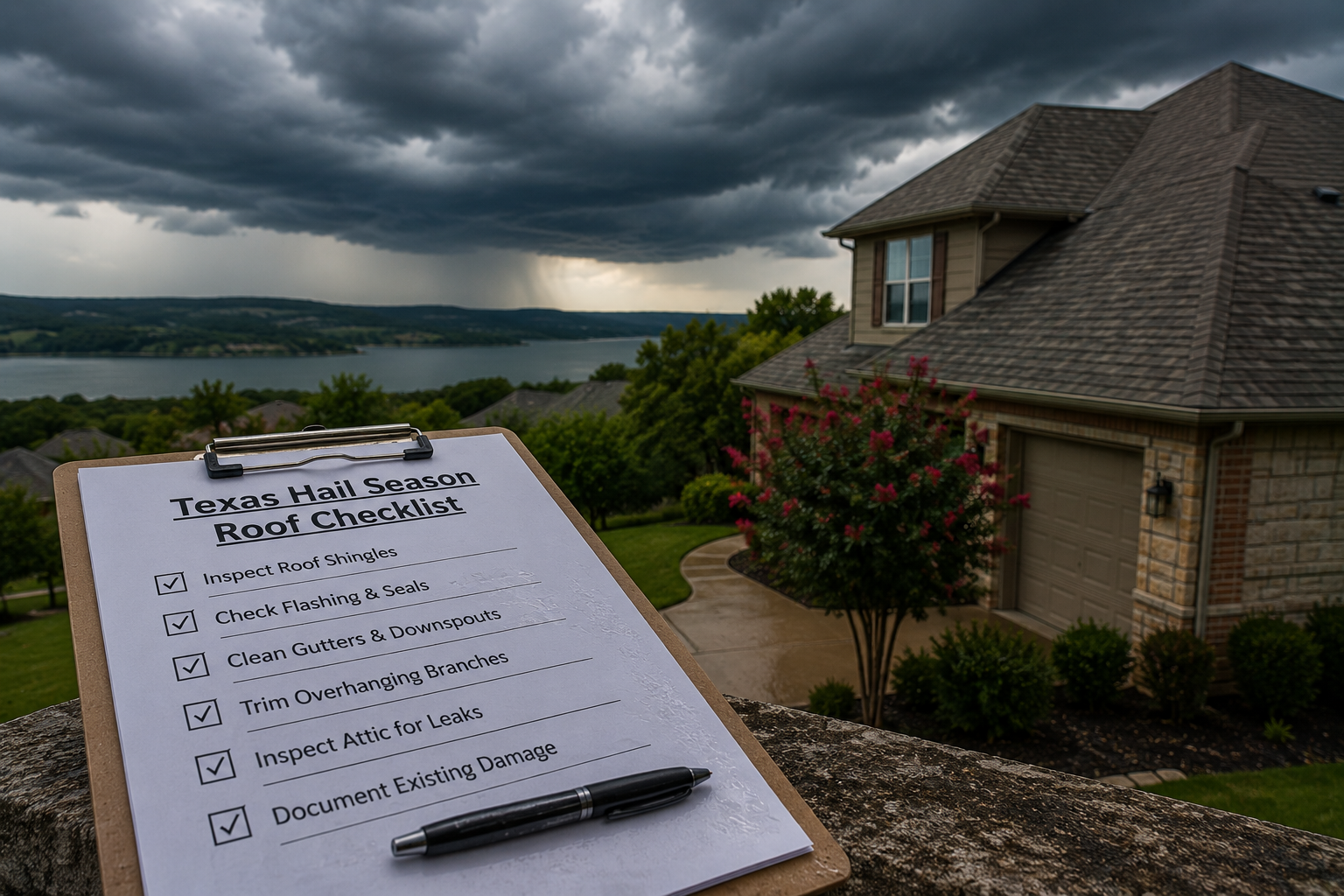
Texas Hail Season Roof Checklist: Prepare Your Granbury Home Before Spring Storms
Spring storms can arrive quickly in Granbury and across Hood County. High winds, hail, and heavy rain can expose small roofing problems and turn them into roof leaks, interior water damage, or urgent repair needs.
Preparing before storm season does not mean climbing onto your roof or trying to diagnose every issue yourself. It means checking what you can safely see from the ground, documenting the condition of your property, and arranging help before an active leak forces a rushed decision. Heritage Roofing serves Granbury and Hood County with residential roofing, inspections, storm-damage support, and emergency service.
Why Prepare Before Storms Arrive?
A roof that is already compromised has less protection when hail, wind-driven rain, or falling branches hit. Loose shingles, worn flashing, clogged gutters, and small leaks can all create paths for water to enter during a severe storm.
Early preparation gives you time to address existing concerns, gather important records, and know who to call if conditions change. It also helps you distinguish new storm-related issues from pre-existing wear when you later review your roof with a contractor or insurance carrier.
Texas weather is unpredictable, but preparation is not complicated. A few practical steps before the season can make the days after a storm far less stressful.
Safety First: Stay Off the Roof
Do not climb onto your roof to inspect it before or after a storm. Wet surfaces, steep pitches, loose shingles, damaged decking, and hidden weak areas can create a serious fall risk.
Instead, walk around your property from the ground and use binoculars only if you can do so safely. Look for obvious changes, such as missing shingles, lifted edges, sagging areas, loose gutters, fallen branches, or visible damage around chimneys and vents.
If you notice a concern—or if your home has recently experienced hail or high winds—schedule a professional roof inspection. A trained roofer can evaluate the full roofing system safely and provide a documented explanation of the findings.
Your Pre-Storm Roof Checklist
Use this checklist before spring storms begin:
- Review your roof’s age and repair history. Know approximately when the roof was installed, what repairs have been completed, and whether you have warranty paperwork available.
- Look for missing or damaged shingles from the ground. Watch for curled edges, cracked shingles, exposed areas, dark patches, or loose pieces in the yard.
- Check visible flashing and roof penetrations. From the ground, look around chimneys, vents, skylights, and roof-to-wall areas for lifted metal, gaps, or visible wear.
- Clean gutters and downspouts. Remove leaves, twigs, and debris so rainwater can move away from the roofline and foundation.
- Trim dead or overhanging branches. Limbs close to the roof can scrape roofing materials or fall during high winds.
- Secure outdoor items. Move patio furniture, grills, décor, and other loose items indoors or secure them before severe weather.
- Check your attic and ceilings. Look for water stains, damp insulation, musty odors, or daylight visible near roof penetrations.
- Confirm your contact information and insurance records. Keep your policy number, carrier contact details, and prior roof paperwork in one easy-to-access location.
If you see a small roof concern before a storm, do not assume it can wait. A targeted roof repair may prevent a minor flashing failure, loose shingle, or leak from becoming a larger water-intrusion problem.
Existing Problems Can Raise Storm Risk
Storms do not create every roof problem from scratch. They often worsen conditions that were already developing.
For example, a loose shingle may lift further in high wind. Worn flashing may allow wind-driven rain to enter. A slow leak can become noticeable once heavy rain saturates an already vulnerable area. Clogged gutters can overflow and force water back toward fascia, soffits, and roof edges.
Pay close attention to:
- Missing, cracked, curling, or loose shingles
- Stained ceilings or walls
- Water spots, damp insulation, or musty attic odors
- Rusted, separated, or visibly damaged flashing
- Debris-filled gutters and downspouts
- Sagging roof areas or soft-looking rooflines
- Old temporary patches or repeated repairs
Proper attic airflow also matters. Excess heat and moisture can contribute to premature material wear and may affect the performance of your roofing system. If you are concerned about airflow, ridge vents, soffit vents, or a leaking skylight, Heritage Roofing’s skylight and attic ventilation services can be evaluated as part of a broader roofing recommendation.
Document Your Roof Before a Storm
Take a few minutes to create a simple pre-storm record. This is not a substitute for a professional inspection, but it can help you identify noticeable changes later.
Before severe weather arrives:
- Take clear, dated photos of each side of your home from the ground
- Photograph visible gutters, downspouts, roof edges, chimneys, skylights, and outdoor structures
- Save invoices, estimates, and warranty documents from previous roof work
- Keep your insurance policy information and carrier contact details available
- Note any existing ceiling stains, leaks, or known roofing concerns
Do not alter photos or attempt to create damage documentation that is not accurate. Honest, time-stamped records are most useful when paired with a contractor’s post-storm inspection report.
What to Do After Hail or Wind
Once the storm has passed and it is safe to go outside, start with a ground-level walk around your property. Avoid touching downed power lines, unstable trees, or damaged structures. If there is an immediate safety concern, contact the appropriate emergency service or utility provider first.
Then take these steps:
- Note the storm date, approximate time, and conditions you observed, such as hail, wind, or heavy rain.
- Photograph visible damage from the ground, including fallen branches, damaged gutters, dented metal, displaced shingles, or debris.
- Check ceilings, attic areas, and upper walls for signs of water entering the home.
- Move belongings away from active drips and use containers to collect water if needed.
- Do not climb onto the roof or attempt temporary repairs that could make the situation less safe.
- Schedule a documented storm and hail damage assessment to understand the roof’s condition and the recommended next steps.
A contractor can inspect and document roofing conditions, provide photographs, and explain needed repairs. However, the insurance carrier—not the contractor—determines whether a claim is covered under your policy. Be cautious of any company that guarantees approval or asks you to sign before you understand the agreement.
Signs of Hail and Wind Damage
Some storm damage can be difficult to identify from the ground. That is why a professional inspection is important after a significant weather event, even if the roof does not appear severely damaged at first glance.
Potential signs include:
- Shingles with bruising, cracking, or loss of protective granules
- Cracked, loose, or missing ridge caps
- Lifted, creased, torn, or missing shingles
- Dented metal vents, flashing, gutters, or other roof components
- Damaged or displaced flashing around roof penetrations
- New water stains on ceilings or walls
- Granules collecting in gutters or at downspout exits
- Fallen branches or debris that may have damaged roofing materials
Hail and wind damage may lead to a focused repair, or it may indicate a larger problem depending on the affected area, roof age, material condition, and inspection findings. Heritage Roofing can help homeowners understand the difference between a repairable concern and a situation that may require a roof replacement.
When Emergency Protection Is Needed
Call for urgent help if your roof has an active leak, a tree impact, missing sections of roofing, or another condition allowing water to enter your home. The priority is to limit additional damage while permanent work is evaluated and scheduled.
Heritage Roofing offers emergency roof repair seven days a week for active leaks and storm-related roof damage. Emergency response may include temporary protection, such as tarping, to reduce additional water intrusion while the full repair scope is determined.
If water is entering your home, protect people first. Move valuables away from the area, use containers to catch water if it is safe to do so, and avoid electrical hazards. Do not enter an attic or room where the ceiling is sagging under the weight of water.
Choose the Right Next Step
After a storm, it is tempting to make a quick decision based on the first person who knocks on the door. Slow down when you can. Ask for identification, proof of insurance, a written scope, and clear answers about the condition of your roof.
For many homeowners, the best next step is a documented inspection and written explanation of the findings. Heritage Roofing provides residential roofing services for homes throughout Central Texas, including repairs, replacements, storm restoration, and long-term roofing guidance.
Schedule a Granbury Roof Inspection
Preparing before spring storms can help protect your home, reduce confusion after a weather event, and give you a clear plan if damage occurs. For an honest assessment and written estimate, Heritage Roofing provides complete roofing services in Central Texas.
Call the Granbury-area team at 817-573-0890 or request a free estimate. Heritage Roofing serves Granbury, Hood County, Glen Rose, Acton, Tolar, Lipan, and nearby Central Texas communities.
Tags