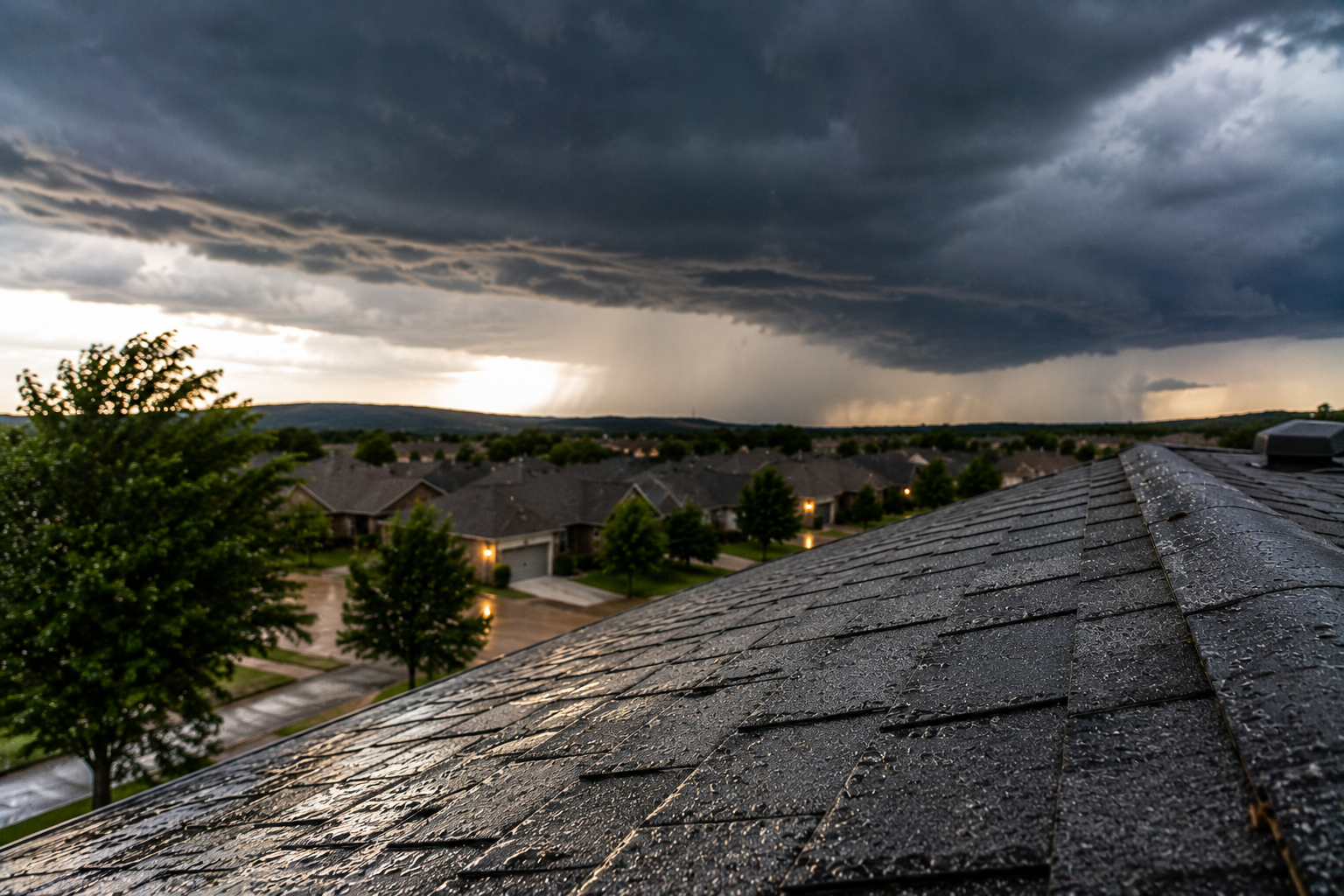
Late-Summer Storm Prep: Protect Your Stephenville, TX Roof From Wind and Hail
Late-summer storms in Stephenville and across Erath County can bring strong wind, heavy rain, and hail with little warning. Those conditions can expose weak points in a roofing system, especially when a roof already has aging shingles, loose flashing, previous repair areas, clogged drainage, or nearby tree debris.
Preparation does not mean climbing onto the roof or attempting risky repairs. It means taking practical steps from safe ground-level areas, keeping important records available, and knowing what to do if a storm creates a leak or visible damage.
Heritage Roofing provides roofing services in Stephenville and Erath County for homeowners, businesses, ranch properties, and property managers.
Why Late-Summer Storms Matter
Late-summer weather can combine intense sun exposure with sudden severe storms. Prolonged heat may reveal existing material wear, while wind-driven rain and hail can affect shingles, ridge caps, flashing, gutters, roof penetrations, and drainage areas.
A small concern can become more urgent when water is driven beneath a lifted shingle, damaged flashing, or worn roof transition. That is why late-season preparation should include both a safe pre-storm review and a plan for documenting conditions afterward.
No roof is storm-proof. However, early attention to visible maintenance concerns can help homeowners and property managers make informed decisions before a weather event creates an active leak.
Prepare Before a Storm
From safe ground-level areas, take a few minutes to prepare your property before severe weather arrives:
- Secure patio furniture, grills, outdoor décor, and other loose items that could become windborne.
- Clear leaves and debris from accessible gutters, downspout outlets, and drainage paths without using unsafe ladder access.
- Trim dead or overhanging limbs when it can be done safely, or schedule professional tree service for larger branches.
- Photograph the exterior of your home, roofline, gutters, outbuildings, and vehicles from the ground.
- Move vehicles into a garage or other safe covered area when possible.
- Keep insurance policy information, prior roofing records, and contractor contact details available.
- Check ceilings and attic areas for existing stains, damp insulation, musty odors, or known leak concerns.
- Make sure household members know where to move if a storm creates an active leak or ceiling damage.
If you notice a pre-existing concern such as missing shingles, damaged flashing, a recurring leak, or a problem around a roof penetration, schedule a roof inspection before severe weather has a chance to make the problem worse.
Safety Comes First
Never climb onto a roof before or after a storm. Wet surfaces, high winds, hidden damage, loose materials, and unstable decking create serious fall hazards.
Avoid downed power lines, damaged electrical equipment, and flooded areas. If a ceiling is sagging from trapped water, do not stand beneath it, puncture it, or enter the affected attic area. Move people and valuables away from the area if it is safe to do so, then contact a qualified professional.
If there is an immediate threat to people or a possible electrical hazard, contact emergency services or your utility provider first.
Look for Ground-Level Warning Signs
Once the storm has passed and it is safe to go outside, walk around the property from the ground. Look for changes that could indicate roofing or drainage damage.
Watch for:
- Missing, lifted, cracked, torn, or displaced shingles
- Damaged or missing ridge caps
- Bent, loose, or missing flashing
- Dented gutters, downspouts, vents, or metal roof components
- Fallen branches, tree impact, or debris against the roofline
- Roofing materials or granules in the yard, gutters, or driveway
- Overflowing gutters or drainage problems
- Water stains, active drips, peeling paint, or new ceiling discoloration
- Water around attic access points, upper walls, or roof-adjacent areas
- Visible damage near skylights, chimneys, vents, or other roof penetrations
Some hail and wind damage is not visible from the ground. A professional storm and hail damage assessment can document roof conditions and identify concerns that may require repair, temporary protection, or further evaluation.
Document Damage Safely
Clear documentation can help you keep track of the damage and communicate with your insurer or contractor. It does not replace a professional inspection, but it gives you a useful record of what you observed.
After a storm:
- Record the date, approximate time, and weather conditions you experienced.
- Take photos and video from safe, ground-level locations.
- Photograph visible exterior issues, fallen limbs, gutters, roof debris, and damaged outdoor property.
- Document interior water stains, drips, affected rooms, and damaged personal property.
- Keep receipts for reasonable steps taken to protect the property from additional damage.
- Save all written communication with your insurance carrier and roofing contractor.
- Do not alter, hide, or discard damaged materials until you have documented the condition and received appropriate guidance.
A contractor can inspect the roof, document observed conditions, and provide photographs and a written estimate. Your insurance carrier—not the contractor—determines coverage, claim payment, and policy requirements.
When to Call for Emergency Help
Contact a professional promptly when you see an active leak, a tree impact, missing roofing sections, exposed decking, significant visible damage, or concerns around flashing and roof penetrations.
Call for help right away if you have:
- Active water intrusion
- A fallen tree or large branch on the roof
- Missing shingles or roofing materials that expose the roof system
- Visible roof decking or an opening in the roof
- A sagging ceiling or substantial interior water damage
- Roof damage near chimneys, skylights, vents, or other penetrations
- Storm damage that threatens equipment, inventory, tenants, or business operations
Heritage Roofing offers emergency roof repair seven days a week for urgent storm damage and active leaks. Emergency work may include temporary protection, such as tarping, to help limit additional water intrusion while permanent repairs are evaluated.
What Emergency Tarping Does
Emergency tarping is a temporary protective measure used when a roof opening, missing materials, or storm damage allows water to enter the building. It is intended to reduce additional water intrusion until a full repair plan can be developed.
A tarp is not a permanent repair, and it cannot guarantee that all water damage will stop or that hidden damage does not exist. Tarping should be completed by trained professionals using safe access methods and a plan that avoids causing additional damage.
Once temporary protection is in place, the next step is a documented assessment and a written recommendation for permanent work. In some cases, a targeted roof repair may be appropriate. In others, widespread damage, aging materials, or repeated leaks may require a broader replacement evaluation.
Avoid Storm-Chasing Scams
After severe weather, be cautious when unsolicited contractors arrive at your door or pressure you to sign immediately. Take time to verify the company before authorizing work.
Before choosing a roofer:
- Confirm local business contact information.
- Ask for proof of insurance.
- Request a written scope of work and clear payment terms.
- Ask how temporary protection, repairs, and change orders will be documented.
- Read every agreement before signing.
- Avoid large upfront payments without a clear written contract.
- Be cautious of anyone who guarantees insurance approval or promises to waive your deductible.
- Do not rely on verbal promises about warranties, pricing, or coverage.
Heritage Roofing provides residential roofing services and commercial roofing support across Central Texas, with documented recommendations based on the actual condition of the property.
Get Help in Stephenville
A late-summer storm can cause visible damage, hidden roof concerns, or an active leak. Acting safely and documenting conditions early can make the next steps clearer.
For storm-damage inspections, emergency repair, temporary protection, and written roofing recommendations, explore complete roofing services in Central Texas or call Heritage Roofing at 254-968-7663.
Heritage Roofing serves Stephenville, Dublin, Hico, Lingleville, Morgan Mill, and surrounding Erath County communities.
Tags