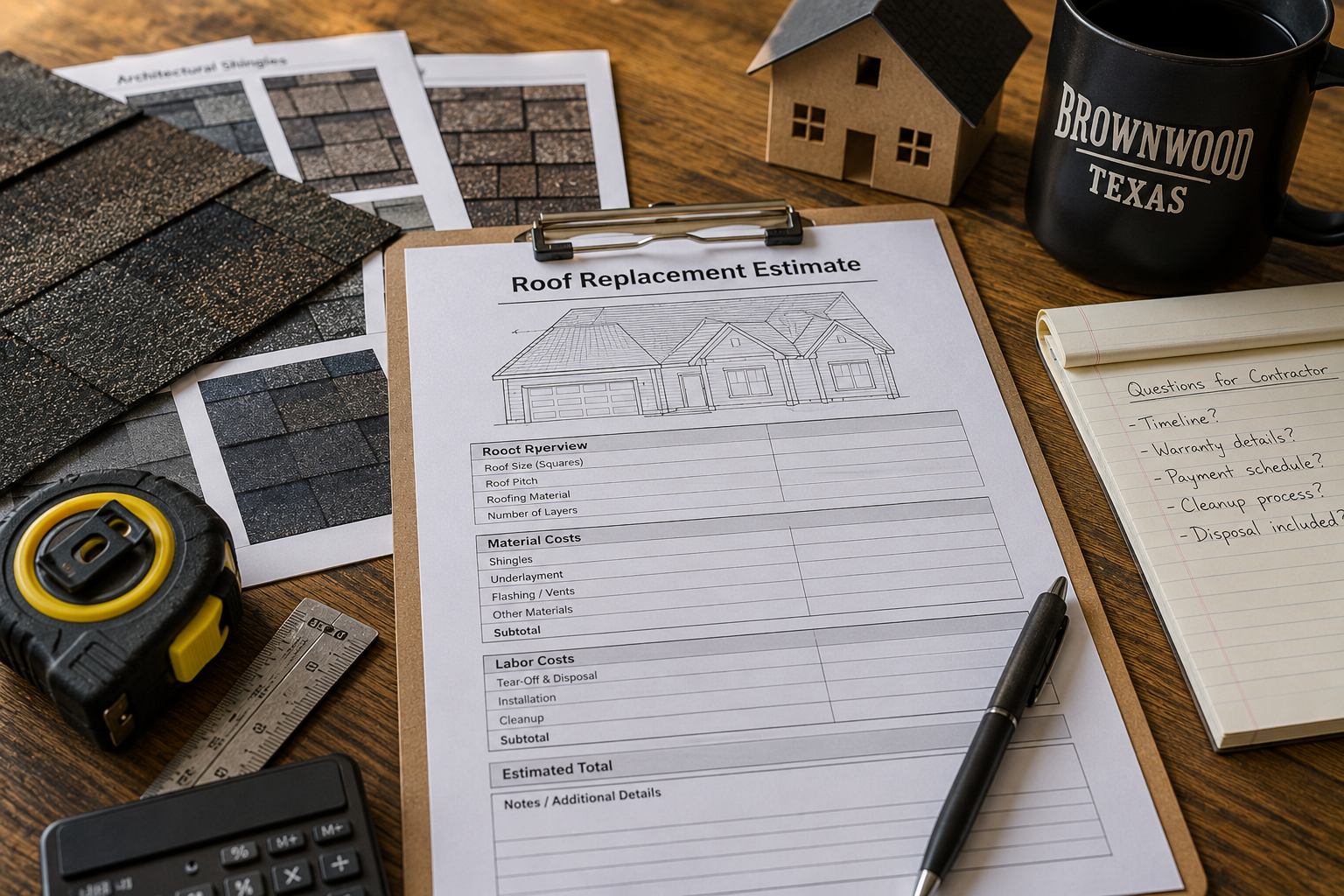
What Does a Roof Replacement Estimate Include? A Brownwood Homeowner’s Guide
A roof replacement estimate should help you understand the work being proposed—not leave you guessing why one bid is lower than another. When comparing roofers in Brownwood and Brown County, the total price matters, but the written scope matters more.
A low number can look attractive until you discover that important details were omitted: tear-off, damaged decking, underlayment, flashing, ventilation, cleanup, or warranty information. The right estimate clearly identifies what is included, what is excluded, and how unexpected conditions will be handled.
Heritage Roofing provides roofing services in Brownwood and Brown County for homeowners and businesses, including inspections, repairs, replacements, storm-damage restoration, and emergency service.
Start With a Written Scope
Before comparing prices, make sure every contractor is quoting the same job. One estimate may include a full tear-off, quality underlayment, new flashing, and complete cleanup, while another may include only basic material installation. Those are not equal proposals, even when the final price appears similar.
A complete roof replacement estimate should tell you:
- What area of the roof will be replaced
- Whether the existing roof will be removed or covered
- Which roofing materials and components will be installed
- How damaged decking or hidden conditions will be handled
- Who is responsible for disposal, cleanup, and property protection
- What warranties apply
- When payment is due and how approved changes will be documented
Ask for the estimate in writing and review it before you sign. A reputable contractor should be able to explain every major line item in plain language.
What a Complete Estimate Should Include
A detailed estimate does not need to be complicated, but it should clearly identify the roofing system and work scope.
Roof Measurements and Scope
The estimate should identify the roof area being measured and replaced. Roof size affects material quantities, labor, disposal, and project duration. It should also explain whether the work includes the entire roof, one section, an addition, or another defined area.
If the proposal is for a full roof replacement, confirm whether it includes tear-off of old materials, disposal, deck inspection, installation of new components, and final cleanup.
Roofing Materials
A written estimate should name the roofing material type and, whenever possible, the manufacturer and product line. Do not settle for a vague phrase such as “new shingles” when you are comparing significant investments.
The proposal should clarify:
- Asphalt shingles, metal panels, tile, or another material type
- Manufacturer, product line, color, and applicable warranty information
- Underlayment type
- Fasteners and installation components
- Ridge caps, starter materials, and accessories
- Flashing and drip-edge work
- Any impact-resistant or upgraded material options
Material choice affects appearance, durability, maintenance needs, warranty terms, and budget. Heritage Roofing offers residential roofing options designed around the home, the owner’s priorities, and Central Texas weather conditions.
Tear-Off and Disposal
Ask whether the estimate includes complete removal of existing roofing materials. A proper tear-off gives the contractor access to inspect the roof deck and identify hidden problems before new materials cover the area.
The estimate should also state how debris will be handled. Look for clear language about removal, disposal, magnetic nail cleanup, and protection of driveways, landscaping, outdoor furniture, and other property features.
A quote that omits disposal or cleanup can create surprise costs or confusion after work begins.
Underlayment, Flashing, and Drip Edge
Shingles or metal panels are only one part of a roofing system. Underlayment, flashing, drip edge, valleys, vents, and other transition areas help direct water away from vulnerable parts of the home.
These items should not be buried inside a one-line “new roof” charge. Ask the contractor to explain which components are being replaced, reused, or repaired. Pay particular attention to flashing around chimneys, skylights, vents, walls, and valleys, because these areas are frequent sources of roof leaks.
If the replacement scope includes a leaking skylight or an attic-airflow concern, ask whether skylight and attic ventilation services should be included in the recommendation.
Why Roof Design Affects the Estimate
Two homes with the same square footage can have very different roof-replacement scopes. A simple roof with few penetrations generally requires less labor and fewer specialized materials than a roof with multiple slopes, steep pitches, valleys, chimneys, skylights, or complex transitions.
Factors that can affect the estimate include:
- Total roof size
- Roof pitch and accessibility
- Number of slopes, facets, ridges, and valleys
- Chimneys, skylights, vents, and other roof penetrations
- Flashing complexity
- Existing layers of roofing material
- Decking condition
- Material selection
- Ventilation needs
- Storm-related damage or temporary protection needs
A contractor should not give you a universal price without seeing the property. A thorough roof inspection helps identify visible conditions and creates a better basis for an accurate written estimate.
Decking and Hidden Conditions
Roof decking is the structural surface beneath roofing materials. It may become soft, stained, deteriorated, or damaged by leaks. In many cases, the full condition of the decking cannot be confirmed until old materials are removed.
That does not mean your estimate should be open-ended. Ask the contractor how potential decking repairs are handled before work begins.
A responsible process should explain:
- How hidden damage will be documented
- Whether photos will be provided
- What type of decking repair may be needed
- How the added cost will be calculated
- Who must approve the work before it proceeds
- Whether a written change order is required
Never assume every sheet of damaged decking is automatically included unless the estimate says so. At the same time, do not choose a contractor simply because their quote ignores the possibility of a legitimate underlying problem.
Warranties and Workmanship
Your estimate should distinguish between the material warranty and the workmanship warranty.
A manufacturer warranty applies to the roofing materials and is subject to the manufacturer’s terms, product requirements, and possible registration steps. A workmanship warranty is provided by the contractor and addresses installation-related issues under its stated terms.
Before approving work, ask:
- Which manufacturer and product warranty apply?
- Is registration required?
- What does the contractor’s workmanship warranty cover?
- How long does workmanship coverage last?
- What conditions or exclusions apply?
- Who do you contact if there is a concern after the project is complete?
Do not rely on a verbal promise such as “lifetime warranty.” Ask for the applicable warranty terms in writing and read them before choosing a contractor.
How to Compare Estimates Fairly
Place written proposals side by side and compare the actual scope—not just the total at the bottom.
| Compare this | Questions to ask |
|---|---|
| Roof scope | Are both estimates replacing the same roof areas and removing the same number of existing layers? |
| Materials | Are the manufacturer, product line, underlayment, flashing, drip edge, ridge caps, and accessories equivalent? |
| Decking | How will damaged decking be documented, priced, and approved? |
| Ventilation | Is attic ventilation assessed, corrected, or excluded? |
| Labor and cleanup | Does the estimate include site protection, debris removal, nail cleanup, and a final walkthrough? |
| Warranties | Are both manufacturer and workmanship warranty terms clearly stated? |
| Payment terms | Is the deposit reasonable, and does the schedule explain when remaining payments are due? |
| Change orders | Must additional work be approved in writing before it is performed? |
The lowest bid is not automatically the best value. A lower estimate may leave out essential components, use lower-grade materials, or fail to define responsibility for cleanup, decking, or warranty support.
Estimate Red Flags
Be cautious if an estimate:
- Provides only one total price with no meaningful scope details
- Does not identify materials, manufacturer, or product type
- Omits tear-off, disposal, property protection, or cleanup
- Uses unclear warranty language
- Does not explain how hidden damage or change orders are handled
- Pressures you to sign immediately
- Requests full payment before work begins
- Refuses to provide proof of liability insurance
- Makes promises about insurance coverage or claim approval
A professional roof repair assessment may be a better option when the problem is isolated and the rest of the roof is in sound condition. An honest contractor should explain whether a repair is reasonable before automatically recommending a complete replacement.
Storm Damage and Insurance Estimates
Storm damage can affect the replacement process, especially after hail or wind events. A contractor can inspect the roof, document visible conditions, provide photos, and explain the repair or replacement scope.
However, your insurance carrier determines whether damage is covered under your policy. Be cautious of any roofer who guarantees approval, promises to cover your deductible, or asks you to sign before you understand the contract.
If your roof may have suffered hail or wind damage, Heritage Roofing can provide a documented storm and hail damage assessment and explain the recommended next step based on the condition of your roof.
Get a Written Estimate in Brownwood
A clear estimate makes it easier to compare contractors, understand the value of the work, and avoid avoidable surprises. Heritage Roofing can inspect your roof, explain the findings, and provide a written recommendation for your home or business.
Explore complete roofing services in Central Texas, including inspections, roof repair, replacement, storm-damage restoration, and emergency service.
Call the Brownwood-area team at 325-510-5768 or request a free estimate. Heritage Roofing serves Brownwood, Early, Bangs, Coleman, Zephyr, and surrounding Brown County communities.
Tags