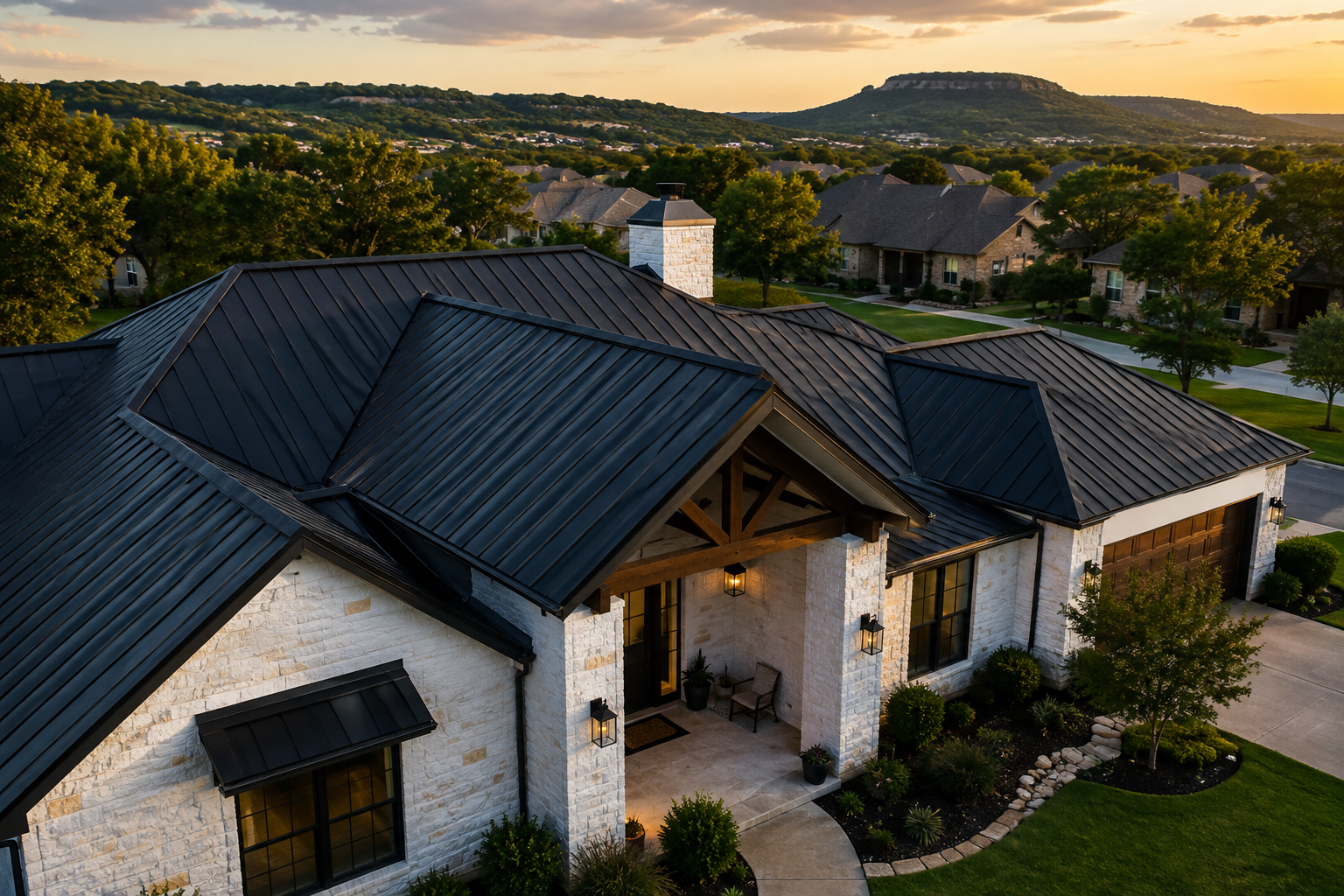
Residential Roofing in Stephenville, TX: Repair or Replace?
When your roof develops a leak, loses shingles, or shows possible hail damage, the first question is usually simple: should you repair it or replace it? The right answer depends on the roof’s overall condition, the extent and location of damage, its age, prior repairs, and the value of solving the problem long term—not merely the lowest upfront cost.
For homeowners comparing options, an experienced local contractor should explain what the roof needs, why, and what each path will realistically accomplish. Heritage Roofing provides residential roofing in Stephenville and throughout Central Texas, with inspections and written estimates designed to help homeowners make an informed decision.
When Roof Repair May Make Sense
A targeted roof repair can be the practical choice when damage is limited and the rest of the roof is still in sound condition. Repair is often worth considering when:
- A small number of shingles are missing, cracked, or wind damaged
- A leak can be traced to a specific flashing, vent, valley, chimney, or pipe-boot issue
- Damage is confined to one area rather than spread across the roof
- The roof was installed relatively recently and has substantial service life remaining
- Existing roofing materials can be matched closely enough for a durable repair
- A professional inspection finds no widespread deterioration, moisture damage, or deck concerns
A properly completed repair should address the source of the problem, not just cover the visible symptom. For example, a ceiling stain does not always sit directly beneath the roof leak; water can travel along decking, framing, or other parts of the structure before appearing indoors.
Repair is not automatically the least expensive choice over time. If a roof needs recurring repairs or damage is appearing in multiple areas, repeated short-term fixes can become more costly and disruptive than a planned replacement.
When Roof Replacement May Be Better
A full roof replacement may be the stronger long-term decision when repair would only postpone a larger failure. Replacement is often worth discussing when:
- Shingles are deteriorating across large sections of the roof
- The roof has repeated leaks or has required multiple repairs in recent years
- Granule loss, cracking, curling, bald spots, or missing shingles are widespread
- Storm damage affects multiple slopes or roofing components
- The roof deck has water damage, rot, or other structural concerns
- Materials are near the end of their expected service life
- A repair cannot be completed reliably because matching materials are unavailable
- You want to address underlayment, flashing, ventilation, and other system components at the same time
A replacement gives the contractor an opportunity to evaluate the roof deck after old materials are removed and to address components that are difficult to correct through a small repair alone. It can also provide a more consistent appearance and a new manufacturer material warranty, subject to product and installation terms.
No one should recommend a replacement simply because it is a larger project. The recommendation should be supported by documented conditions, photographs when appropriate, a clear written scope, and an explanation of why a repair would not offer dependable value.
Roof Repair vs. Replacement
| Factor | Repair may be appropriate when | Replacement may be appropriate when |
|---|---|---|
| Damage extent | Damage is isolated to a small, clearly defined area | Damage is widespread or affects several roof areas |
| Roof condition | The remaining roof is in good condition | Shingles and components show broad deterioration |
| Leaks | There is one identifiable, repairable source | Leaks recur or occur in more than one location |
| Age and remaining life | The roof has substantial useful life remaining | The roof is approaching the end of its useful life |
| Upfront cost | A focused repair can solve the underlying issue | Higher initial cost may prevent repeated repairs |
| Work scope | Decking, flashing, and ventilation concerns are limited | Multiple system components need attention |
| Long-term goal | Extend the life of an otherwise sound roof | Reset the roofing system for long-term protection |
The table is a starting point, not a diagnosis. A contractor should inspect the actual roof before recommending either option.
How Hail and Wind Damage Change the Decision
Central Texas weather can cause damage that is difficult to see from the ground. Hail can bruise shingles, dislodge granules, crack ridge caps, and dent metal components. Wind can lift or remove shingles, damage flashing, and create openings that allow water to enter.
If your property has been through a severe storm, request a documented storm and hail damage assessment. The inspection should identify visible damage, document findings with photographs when needed, and help you understand whether a targeted repair or a broader replacement scope is appropriate.
A roofing contractor can provide damage documentation and help explain the scope of work, but no contractor should guarantee that an insurance carrier will approve a claim. Your insurer determines coverage based on your policy, inspection findings, and claim review.
If wind damage causes an active leak or leaves part of the roof exposed, do not wait for a standard appointment. Heritage Roofing provides emergency roof repair seven days a week to help limit further water intrusion while permanent repairs are planned.
Hidden Issues That Affect Scope
The visible roofing surface is only part of the system. An inspection may uncover concerns that affect whether repair or replacement makes sense, including:
- Soft, stained, or deteriorated roof decking
- Failed flashing around chimneys, skylights, vents, walls, or valleys
- Worn pipe boots, ridge caps, or roof penetrations
- Moisture entering the attic or interior
- Inadequate intake or exhaust ventilation
- Previous repairs that were poorly installed or are no longer performing
Ventilation deserves particular attention. Heat and moisture trapped in an attic can contribute to premature material wear and may affect the performance of a new roofing system. If ventilation or skylight-related issues are part of the problem, ask how skylight and attic ventilation services fit into the recommended scope.
Hidden damage does not mean you should expect an open-ended bill. Ask the contractor how concealed conditions will be documented, when a change order would be required, who must approve added work, and how the cost will be calculated before work proceeds.
Start With a Professional Inspection
A homeowner should not have to guess based on a few visible shingles or an internet checklist. A professional roof inspection gives you a clearer picture of roofing materials, flashing, valleys, ridges, ventilation, gutters, and visible signs of water intrusion.
After the inspection, ask for a written explanation that separates immediate concerns from maintenance items and long-term planning. You should understand whether the recommended work is intended to stop an active leak, correct storm damage, extend the remaining roof life, or replace a failing system.
A quality contractor should also explain the tradeoffs. For instance, an isolated flashing repair may be sensible on an otherwise healthy roof, while the same repair may not be a good long-term investment if surrounding shingles are broadly failing.
Questions Before You Approve Work
Before authorizing a repair or replacement, ask these questions:
- What specific condition is causing the recommendation?
- Can you show me the affected areas with photos or during a walkthrough?
- Is a repair expected to solve the underlying problem, and for how long?
- What materials, underlayment, flashing, and ventilation work are included?
- What happens if damaged decking or concealed issues are found?
- Will added work require a written change order before proceeding?
- What material and workmanship warranties apply?
- What is the expected schedule, cleanup process, and final walkthrough plan?
- Can you provide proof of liability insurance and explain worker-coverage arrangements?
- Who will be my point of contact during the project?
Get the full scope in writing. A clear estimate makes it easier to compare options fairly and prevents misunderstandings once materials are ordered or work begins.
Get a Clear Recommendation
If you are deciding between repair and replacement, Heritage Roofing can inspect the roof, explain the findings clearly, and provide a written estimate for the work that makes sense for your property. Explore all available roofing services in Central Texas, including residential repair, replacement, inspections, storm-damage restoration, and emergency response.
Call Heritage Roofing at 254-968-7663 or request a free estimate. A documented inspection is the right place to start before committing to any roofing work.
Tags