Emergency Roof Repair Guide: What to Do When Your Dublin, TX Roof Is Leaking
A roof leak can be stressful, especially during a storm or when water reaches ceilings, insulation, electronics, inventory, or living spaces. The most important first step is to protect people and avoid unsafe roof access.
Whether the leak is in a home, ranch property, office, or other building in Dublin or Erath County, a prompt professional assessment can help identify visible damage, provide temporary protection when appropriate, and outline the next steps for permanent repair.
Heritage Roofing provides roofing services in Dublin and Erath County for roof leaks, storm damage, inspections, repairs, replacement evaluations, and emergency needs.
Immediate Safety Priorities
Keep people away from water near electrical fixtures, outlets, light fixtures, or electrical equipment. If water is near electricity, do not touch the area or attempt to move electrical items unless it is safe to do so.
If you can do so safely:
- Move furniture, electronics, and valuables away from the affected area.
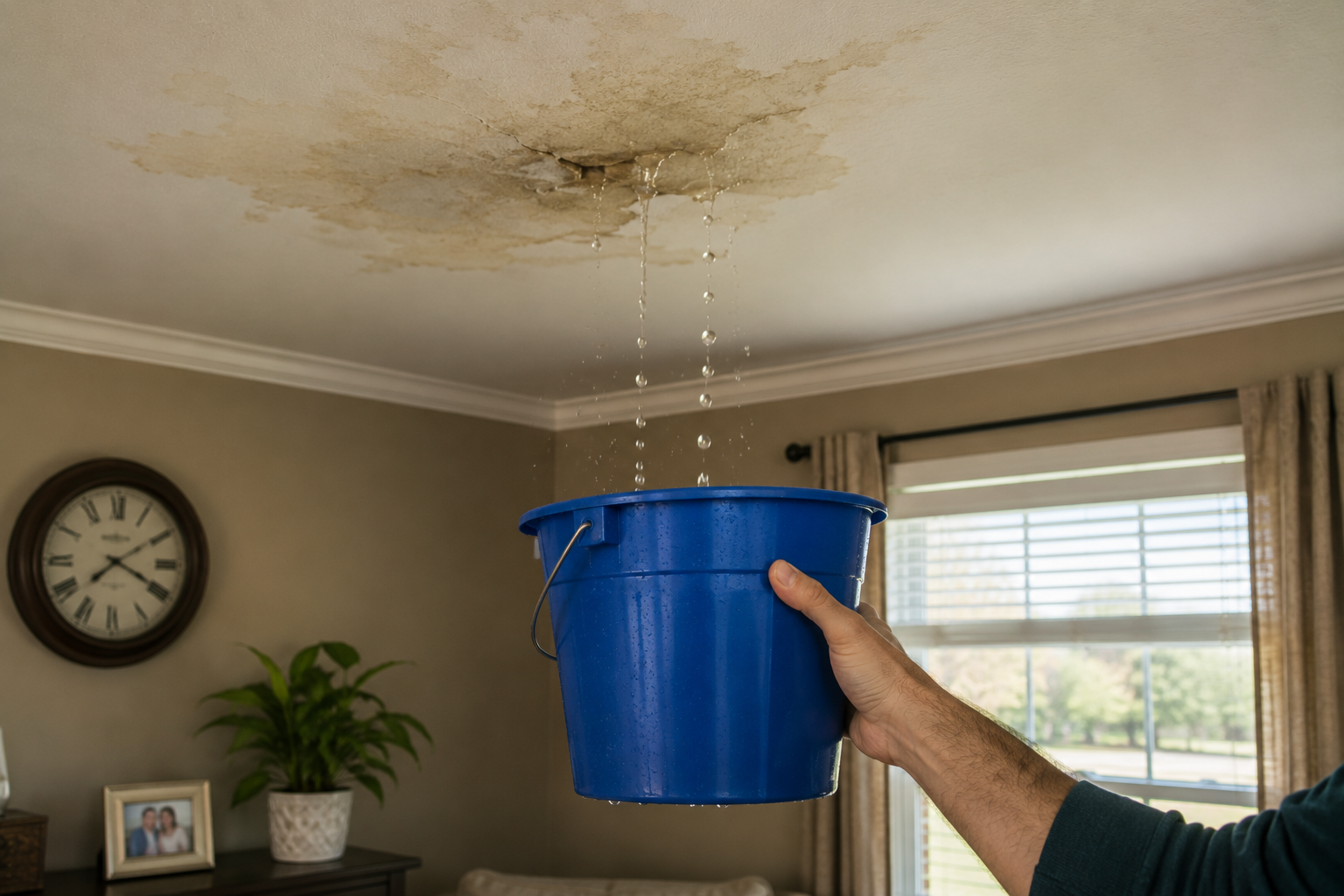
- Place containers beneath active drips.
- Use towels or plastic sheeting to protect nearby belongings.
- Keep children, pets, employees, and visitors away from wet areas.
- Note which rooms are affected and when the leak first appeared.
- Contact emergency services if there is an immediate life-safety or electrical hazard.
Do not stand beneath a sagging ceiling, puncture the ceiling, or enter an attic with heavy water intrusion or wet insulation. A water-damaged ceiling can be unstable.
Limit Interior Damage Safely
Once people are safe, take reasonable steps to limit further interior damage from a safe location. Contain dripping water, move sensitive items away from the leak, and photograph what you observe.
Take photos or video of:
- Active drips, ceiling stains, and damaged drywall.
- Wet floors, furnishings, equipment, or personal property.
- The affected room and nearby areas.
- Visible exterior damage from safe ground-level positions.
- Fallen limbs, roof debris, damaged gutters, or displaced materials.
Keep receipts for reasonable protective steps you take. Documentation can help establish a timeline and make it easier to communicate with a roofing contractor or insurance carrier.
Do Not Take These Risks
A roof leak does not mean you should climb onto the roof. Wet roofing, high winds, lightning, loose materials, hidden damage, and unstable roof decking can create severe fall hazards.
Avoid:
- Walking on a wet or damaged roof.
- Climbing a ladder during rain, wind, or poor visibility.
- Nailing, stapling, or attempting to install a tarp without training and safe access.
- Clearing a roof drain or gutter from the roof during severe weather.
- Touching water near electrical fixtures or equipment.
- Assuming a ceiling stain identifies the exact location of a roof opening.
- Signing repair agreements under pressure from an unsolicited contractor.
Water can travel along framing, beneath roofing materials, or around penetrations before it becomes visible inside. The interior stain may not be directly below the leak source.
Common Roof-Leak Causes
Roof leaks in Dublin and the surrounding Erath County area can develop for many reasons. Storms may expose weak points that were not obvious before, but leaks can also result from normal material wear or past repair failures.
Common causes include:
- Wind-lifted, cracked, missing, or displaced shingles.
- Damaged flashing around chimneys, walls, skylights, and roof transitions.
- Cracked pipe boots or failed seals around roof penetrations.
- Worn valley materials or drainage concerns.
- Tree impact, fallen limbs, or windborne debris.
- Clogged drainage areas that allow water to back up.
- Aging roofing materials, fasteners, or sealants.
- Previous repairs that have deteriorated or failed.
- Damage around vents, ridge caps, or other roof components.
A professional roof repair assessment can help identify the likely leak source and determine whether a targeted repair is practical.
Document Conditions
Write down the date and time you first noticed the leak, the weather conditions, rooms affected, and actions taken to protect the property. Take clear photos and videos from safe ground-level or interior locations.
Keep records of:
- Recent storm dates, wind, hail, or heavy-rain conditions.
- Exterior changes visible from the ground.
- Interior water stains, drips, damp insulation, or damaged belongings.
- Previous roof repairs, invoices, and warranty documents.
- Calls, emails, and messages with your insurer or contractor.
- Temporary protection or cleanup expenses.
A roofing contractor can inspect and document observed conditions, provide photos, and prepare a written estimate. Your insurance carrier—not the roofing contractor—determines coverage, claim payment, and policy requirements.
Emergency Tarping
Emergency tarping is a temporary protective step used when storm damage, missing materials, or a roof opening allows water to enter the structure. A professionally installed tarp may help reduce additional water intrusion while a full inspection and permanent repair plan are completed.
Tarping is not a permanent roof repair. It cannot guarantee that all water entry will stop or that hidden damage is absent. It should be completed by trained professionals using safe access methods and materials appropriate for temporary protection.
For active leaks or storm-related roof openings, Heritage Roofing offers emergency roof repair and can determine whether temporary protection is appropriate.
What to Expect
An emergency roof-repair visit typically begins with a safe evaluation of accessible roof and exterior conditions. The contractor may document visible damage, identify likely leak paths, photograph problem areas, and explain whether temporary protection, targeted repair, or a broader evaluation is appropriate.
Ask for clarity about:
- What conditions were observed.
- What temporary measures are recommended.
- Whether a repair or replacement evaluation is needed.
- Materials and work included in the written scope.
- Property protection and cleanup.
- Schedule expectations and weather-related changes.
- Warranty information, when applicable.
A documented roof inspection may be recommended when the leak source, storm impact, drainage condition, or overall roof condition needs further evaluation.
Insurance and Storm Damage
Wind, hail, heavy rain, and tree impact can damage shingles, flashing, vents, gutters, roof penetrations, and other roofing components. Some concerns are not visible from ground level.
After a significant storm, schedule a storm and hail damage assessment if you observe damage or experience an active leak. A contractor can document visible roof conditions and provide a repair or replacement estimate.
Insurance carriers determine coverage, claim payment, deductibles, and policy requirements. Be cautious of any contractor who guarantees claim approval, promises to waive a deductible, or pressures you to sign immediately.
Repair or Replacement?
A focused repair may be appropriate when damage is limited and the rest of the roofing system is in good condition. Recurring leaks, broad material wear, widespread storm damage, deteriorated roof decking, or repeated failed repairs may require a larger roof replacement evaluation.
The right choice should be based on the actual roof condition, the specific cause of the leak, material availability, repair history, and your goals for the property. A written assessment gives you a better basis for deciding than a guess based only on an interior stain.
Get Help in Dublin
A roof leak should be addressed promptly, but safety comes first. Protect people and property from a safe location, document the conditions you can see, and arrange a professional assessment rather than taking risks on a wet or damaged roof.
For emergency roof repair, leak inspections, temporary protection, storm-damage assessments, and written recommendations, explore complete roofing services in Central Texas or call Heritage Roofing’s Dublin-area team at 254-968-7663.
Heritage Roofing serves Dublin, Stephenville, Hico, Lingleville, Morgan Mill, and surrounding Erath County communities.
Tags