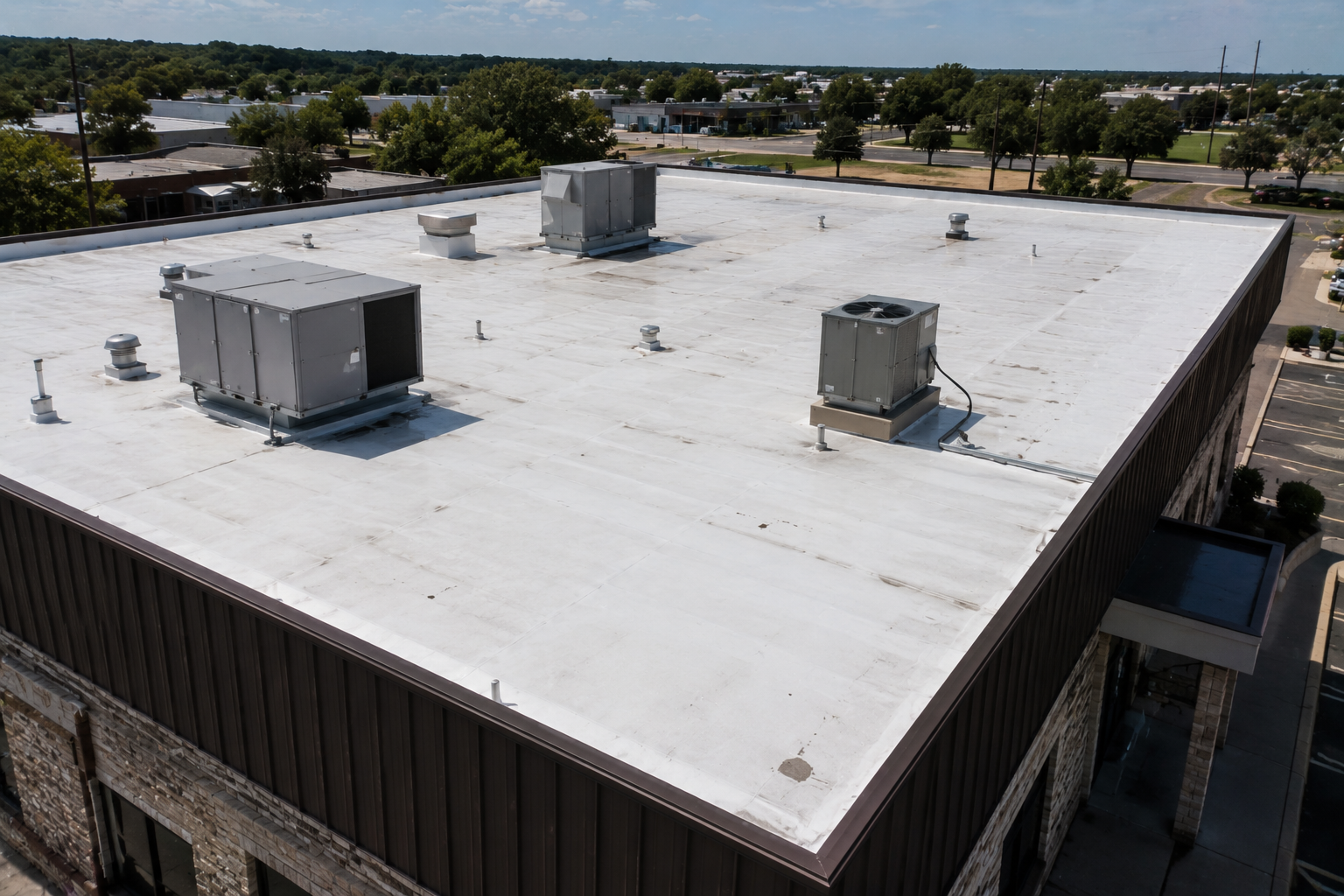
Commercial roof replacement is more than a construction project. For business owners in Stephenville, TX, it is a decision that can affect daily operations, occupants, inventory, equipment, tenants, operating costs, and long-term property planning.
A well-planned replacement helps protect the building while giving owners more control over scheduling, material selection, access, budgeting, and business continuity. Heritage Roofing provides commercial roofing services for businesses in Stephenville, Dublin and Hico.
Why Commercial Roof Replacement Is a Business Continuity Decision
A commercial roof protects more than the structure itself. It helps protect employees, customers, tenants, equipment, inventory, records, and the ability to operate normally.
When a roof develops recurring leaks or widespread deterioration, the consequences can extend beyond the cost of a repair. Water intrusion may disrupt operations, damage interior finishes or stored materials, create slip hazards, interfere with electrical equipment, and affect tenant comfort.
Planning ahead gives property owners more control over scheduling, access, budgeting, material selection, and operational coordination. A professional assessment can help determine whether focused repairs remain practical or whether replacement planning is the more responsible long-term option.
Signs Your Commercial Roof May Need Replacement
Not every commercial roof issue requires a full replacement. A localized problem may be repairable when the surrounding roofing system remains in good condition.
A replacement evaluation may be appropriate if you notice:
- Recurring leaks in the same or multiple areas
- Widespread membrane cracking, shrinkage, splitting, or deterioration
- Repeated seam, flashing, curb, or penetration failures
- Persistent ponding water or drainage problems
- Saturated insulation or recurring interior moisture concerns
- Storm damage affecting a broad area of the roof
- Aging materials nearing the end of their expected service life
- Mounting repair costs with no durable improvement
- Deteriorated roof decking or structural concerns
- Multiple prior repairs that have failed or become difficult to maintain
If you are seeing these types of concerns, schedule a professional inspection before deciding whether repairs or replacement are appropriate.
Importance of a Professional Roof Inspection
Before deciding on a commercial roof replacement, a professional inspection is essential. An inspection provides a clearer picture of the roof’s present condition and helps prevent decisions based only on an interior leak or the roof’s age.
A commercial roof inspection may evaluate:
- Roof membrane condition
- Seams, fasteners, and flashing details
- Roof penetrations, including pipes, vents, skylights, and HVAC curbs
- Drainage areas, scuppers, drains, gutters, and downspouts
- Ponding water and low areas
- Insulation condition, where accessible
- Edge metal, coping, parapet walls, and termination details
- Rooftop equipment areas and service pathways
- Interior evidence of leaks or moisture
- Visible roof-deck conditions
A documented roof inspection can help identify visible conditions, evaluate practical repair options, and support a clearer replacement decision.
Common Commercial Roofing Systems in Stephenville
Stephenville commercial properties use different roofing systems based on building design, roof slope, drainage requirements, occupant needs, energy goals, and budget.
Common commercial roofing systems include:
- TPO single-ply membrane roofing
- EPDM single-ply membrane roofing
- Modified bitumen roofing
- Built-up roofing systems
- Metal-panel roofing systems
- Coating or restoration systems, when appropriate
The best system depends on the existing roof, building use, roof geometry, drainage, insulation needs, local weather exposure, manufacturer requirements, and the details of the installation. Heritage Roofing can review the practical options during a commercial roofing evaluation.
Building the Replacement Scope
A detailed commercial roof-replacement scope protects the building owner and creates clearer expectations before work begins. It should identify what is being replaced, how the work will be performed, and which conditions could affect pricing or scheduling.
A commercial replacement scope may include:
- Roof measurements and system design
- Selected roofing membrane or panel system
- Tear-off or recover evaluation
- Existing deck and insulation conditions
- Insulation upgrades, when appropriate
- Drainage improvements or corrections
- Flashing, curbs, edge metal, and penetration details
- Coordination around rooftop HVAC units and other equipment
- Safety planning and access procedures
- Material staging and delivery logistics
- Debris removal, disposal, and daily cleanup
- Property-protection measures
- Written warranty information and maintenance recommendations
A clear scope allows you to compare proposals based on materials, workmanship, property protection, and long-term performance—not only the lowest total price.
Planning for Operational Continuity
Roof replacement can affect normal business activity, but early coordination can reduce avoidable disruption. The contractor should understand how the property functions before setting work sequences, access plans, delivery timing, and safety procedures.
Before the project starts, identify:
- Sensitive equipment, electronics, inventory, or production areas
- Tenant spaces and customer-facing areas
- Delivery routes, loading zones, and parking needs
- Busy operating hours, events, or seasonal constraints
- Rooftop equipment that may require continued access
- Areas where noise, vibration, dust, or odors could affect operations
- Interior spaces that need added protection
- Primary contacts for the owner, property manager, tenants, and contractor
Discuss project phasing, work hours, access, weather contingencies, material staging, and communication expectations before materials arrive. Heritage Roofing can help coordinate the practical details involved in commercial roofing services.
Drainage and Roof Penetrations
Low-slope commercial roofs depend on proper drainage and durable details around openings. Water that remains on the roof surface for extended periods can place additional stress on seams, membranes, flashing, and drainage components.
Pay close attention to:
- Roof drains, scuppers, gutters, and downspouts
- Areas of recurring ponding water
- HVAC curbs and equipment supports
- Pipe penetrations and boots
- Skylights, hatches, and vents
- Wall flashings and parapet details
- Edge metal and termination bars
- Roof valleys, transitions, and low points
Addressing these details during replacement can help reduce future maintenance concerns and support the performance of the overall roofing system.
What a Detailed Estimate Should Include
A professional commercial roofing estimate should provide enough detail for you to understand the recommended work and compare proposals fairly.
Ask for a written scope that addresses:
- Recommended roof system and manufacturer
- Materials, thicknesses, and key specifications
- Tear-off or recover work
- Insulation and roof-deck work, if needed
- Flashing, penetrations, edge details, and drainage work
- Anticipated project schedule
- Access, safety, and property-protection procedures
- Cleanup, debris handling, and disposal
- Payment terms and change-order process
- Warranty information and exclusions
- Assumptions or conditions that could affect the final scope
The estimate should make clear what the contractor observed, what work is recommended, and why the proposed system fits the property.
Contractor Selection and Red Flags
Commercial roofing projects require experience with low-slope systems, building operations, jobsite safety, manufacturer requirements, and detailed waterproofing work.
Before selecting a contractor:
- Verify local business information and commercial roofing experience
- Request proof of appropriate insurance
- Ask about experience with the proposed roofing system
- Compare written scopes rather than only total prices
- Ask how the contractor will protect occupants, tenants, inventory, and landscaping
- Discuss safety planning, access, staging, cleanup, and communication
- Review warranty terms and the process for service after completion
- Avoid pressure to sign immediately
- Be cautious of guarantees about insurance approval or claim outcomes
A contractor can inspect and document observed conditions, prepare a scope, and offer repair or replacement recommendations. Insurance carriers determine coverage, deductibles, claim payments, and policy terms.
Storm Damage and Insurance Considerations
Hail, high winds, falling limbs, and heavy rain can damage commercial roofing membranes, flashing, roof penetrations, gutters, edge metal, and rooftop components. Some storm-related damage may not be obvious from ground level.
If your Stephenville property has experienced a significant weather event, arrange a storm and hail damage assessment. Heritage Roofing can document visible conditions and provide a written recommendation for appropriate repair, maintenance, or replacement work.
Keep photos, videos, maintenance records, prior repair documentation, and a timeline of storm events and leak reports. Your insurance carrier—not the roofing contractor—determines whether coverage applies under your specific policy.
Repair or Replacement
A targeted repair may be the right choice when the problem is isolated, the surrounding roofing system remains in good condition, and a durable repair can be completed using compatible materials.
A larger replacement evaluation may make more sense when leaks recur, repairs have accumulated, storm damage is widespread, materials are broadly deteriorated, insulation is compromised, or the roof is nearing the end of its useful service life.
Heritage Roofing can help evaluate whether a focused commercial roof repair, maintenance approach, or full roof replacement is the most practical option for your property.
Plan Your Stephenville Commercial Roof Replacement
A commercial roof replacement deserves a documented inspection, a clear written scope, and a plan for protecting daily operations. Whether you are dealing with recurring leaks, storm damage, material deterioration, drainage concerns, or an aging low-slope roof, Heritage Roofing can help evaluate the practical next step.
For commercial roof inspections, replacement planning, repairs, maintenance, storm-damage assessments, and emergency support in Stephenville, Dublin and Hico, explore complete roofing services in Central Texas or call Heritage Roofing at 254-968-7663.
Tags