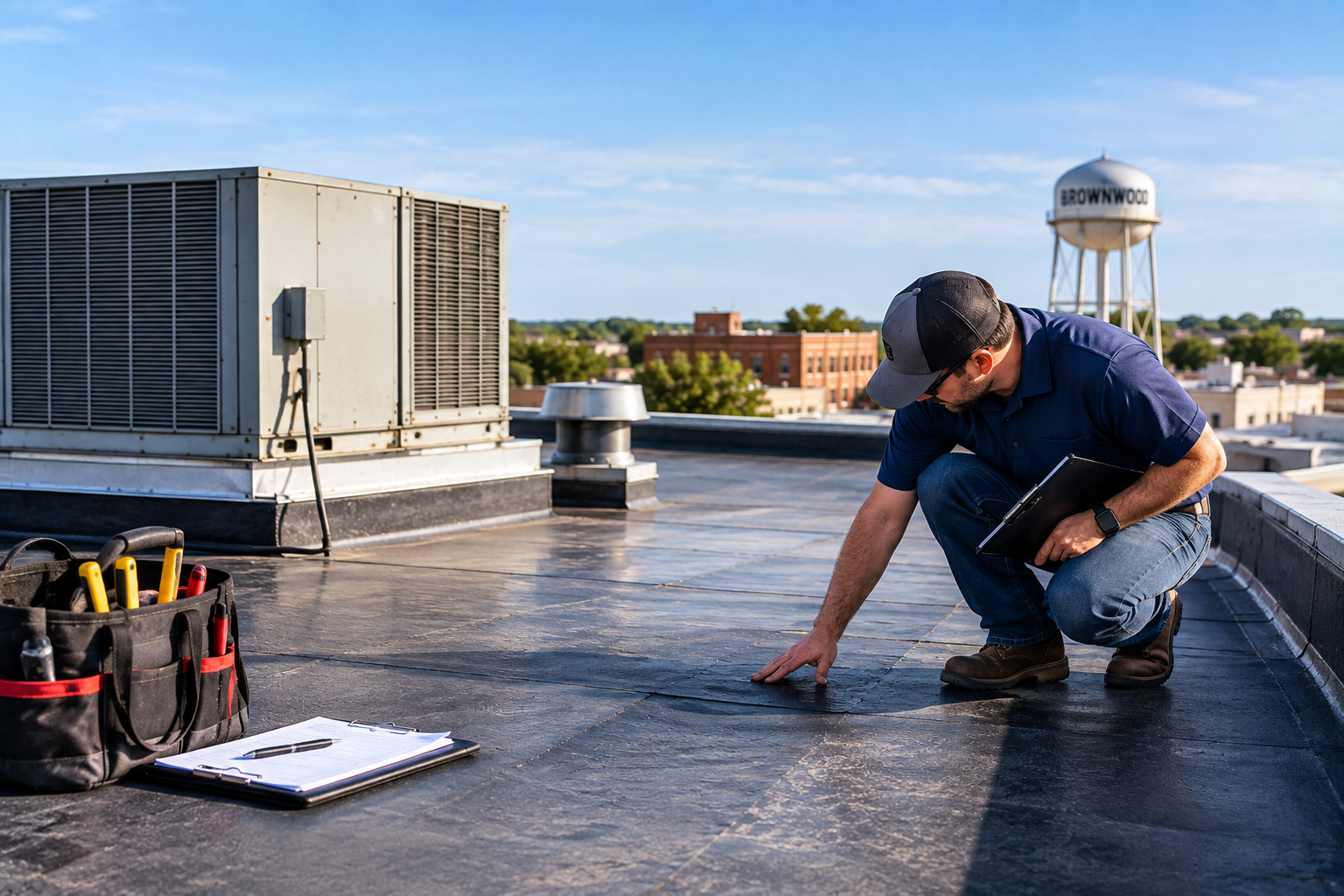
Commercial Flat Roof Maintenance Guide for Brownwood, TX Business Owners
For a Brownwood business, a commercial roof is more than a building component. It helps protect employees, customers, equipment, inventory, tenants, and daily operations. When a low-slope roof develops a leak, the effects can spread quickly—from ceiling stains and wet insulation to disrupted workspaces and damaged property.
Preventive maintenance cannot eliminate every roof failure. It can, however, help property owners identify developing concerns early, prioritize repairs, document roof conditions, and plan budgets before a small problem becomes an operational disruption.
Heritage Roofing provides commercial roofing services in Brownwood and Brown County for local businesses, facilities, retail properties, offices, agricultural operations, churches, warehouses, and other commercial buildings.
Why Maintenance Matters
Commercial roofs often have low-slope designs with membranes, seams, drains, flashing, penetrations, rooftop equipment, and edge details that must work together to move water away from the building. A minor opening at a seam, pipe boot, HVAC curb, drain, or flashing transition can allow water to travel beneath the roof surface before it becomes visible indoors.
Regular maintenance helps business owners:
- Identify wear before it creates an active leak
- Monitor drainage and areas where debris collects
- Document roof conditions for building records
- Plan repairs and replacement decisions more effectively
- Reduce the likelihood of avoidable interior damage
- Support communication with tenants, staff, insurers, and contractors
A maintenance plan should be based on the roof system, its age, past repairs, surrounding trees, rooftop equipment, drainage design, and the building’s use.
Commercial Roof Systems
Brownwood businesses may have several types of commercial roof systems. Maintenance needs depend on the material, installation details, age, roof traffic, drainage, and condition of the existing system.
TPO Roofing
TPO is a single-ply membrane commonly used on low-slope commercial roofs. Inspections may focus on membrane condition, seams, flashing, penetrations, drains, and areas around rooftop equipment.
EPDM Roofing
EPDM is another single-ply membrane system. A professional assessment can evaluate seams, edge details, penetrations, drainage areas, and signs of wear or damage.
Modified Bitumen and Built-Up Roofing
Modified bitumen and built-up roofs may include multiple layers and surfaced materials. Inspections should evaluate seams, transitions, flashing, drainage, visible cracking, blisters, and signs of water intrusion.
Commercial Metal Roofing
Metal-panel roofing is common on some commercial, agricultural, and industrial buildings. Maintenance may include reviewing fasteners, panel seams, flashing, penetrations, sealants, gutters, and any areas affected by wind or debris.
Heritage Roofing provides commercial roofing systems including TPO, EPDM, metal, and flat-roof applications. The appropriate maintenance approach depends on the actual system and building conditions.
What a Maintenance Visit Should Evaluate
A professional commercial roof visit should look beyond the visible roof surface. The goal is to identify areas that may allow water intrusion, develop into a larger repair, or interfere with roof drainage.
Key areas include:
- Membrane condition, including visible tears, punctures, wrinkles, bubbles, or blisters
- Seams, transitions, and flashing details
- Pipe penetrations, equipment curbs, drains, and vent openings
- HVAC equipment areas and walk paths
- Drains, scuppers, gutters, downspouts, and overflow points
- Edge metal, coping, and perimeter details
- Roof debris and vegetation growth
- Signs of ponding or standing water
- Interior stains, wet insulation, musty odors, or ceiling damage
- Visible storm damage, fallen branches, or wind-related debris
These areas should be evaluated safely by a qualified professional. Untrained rooftop access can cause injuries and may damage roofing materials.
Drainage Is a Major Priority
Low-slope roofs are designed to direct water toward drains, scuppers, gutters, and other discharge points. When water cannot move freely, it may collect around drains, edges, seams, rooftop equipment, or penetrations.
Standing water may point to a blocked drain, debris buildup, inadequate slope, damaged components, or another drainage concern. It should not be ignored just because it eventually dries.
Property owners and facility managers can help by monitoring accessible drainage areas from the ground and keeping surrounding gutters, downspout exits, and drain routes clear when safe to do so. Avoid unsafe ladder use or rooftop access. If debris is on the roof or a drain appears blocked, schedule professional service.
Monthly Ground-Level Checklist
A monthly walk-around can help you notice changes early. It is not a substitute for a professional roof inspection, but it gives you a useful record of what is happening around the property.
From the ground and other safe locations, look for:
- Debris around roof edges, gutters, and downspouts
- Overflow marks, blocked downspouts, or water draining toward the building
- Loose or damaged edge metal, gutters, or visible flashing
- Fallen branches, storm debris, or objects near the roofline
- Damaged rooftop equipment visible from a safe location
- Water stains, peeling paint, or discoloration on ceilings and walls
- Musty odors, damp areas, or signs of water near interior access points
- New leaks around windows, upper walls, or roof-adjacent areas
Keep a simple dated log with photos when possible. That record can help a contractor understand whether a condition is new, recurring, or getting worse.
When to Schedule an Inspection
A commercial roof should be professionally inspected at least once each year. Additional inspections are appropriate after significant hail, high wind, heavy rain, a visible leak, a tree impact, or an event that may have affected rooftop equipment or drainage.
You should schedule an inspection promptly when you notice:
- Active water intrusion
- New ceiling stains or recurring leaks
- Ponding water that remains after weather improves
- Visible membrane bubbles, blisters, tears, or seam separation
- Cracked, loose, or damaged flashing
- Loose edge metal or damaged gutters
- Storm debris or tree impact
- Damage around HVAC equipment, pipe penetrations, skylights, or roof curbs
- A sudden increase in maintenance concerns or interior moisture
A commercial roof inspection can document visible roofing conditions, drainage concerns, penetrations, flashing, and other areas that may need attention.
Keep Detailed Records
Commercial roof records help owners and property managers make better decisions over time. They can also support warranty reviews, capital planning, tenant communication, insurance discussions, and future contractor comparisons.
Maintain a file that includes:
- Roof installation date and known roof-system information
- Prior inspection reports and photographs
- Invoices and written repair scopes
- Warranty documents and manufacturer information
- Records of active leaks and the date they were first noticed
- Storm dates, weather notes, and damage photographs
- Maintenance logs for drains, gutters, and roof-adjacent areas
- Communication related to tenant concerns or interior water intrusion
Good records do not guarantee warranty or insurance coverage, but they make it easier to explain what has occurred and when.
What to Expect From an Inspection
A commercial roofing contractor should explain what was observed, identify areas of concern, and provide a written recommendation when work is needed. Depending on access and safety conditions, this may include photographs, an overview of the roof system, drainage observations, visible defect documentation, and a repair or maintenance estimate.
If the inspection suggests a repair is appropriate, Heritage Roofing can provide commercial roof repair recommendations based on the specific issue. Not every concern requires full replacement, but ignoring recurring leaks or widespread deterioration can increase long-term costs and disruption.
Ask questions about the scope, materials, timeline expectations, property protection, cleanup, warranty terms, and how work will affect access to the building. Clear written communication is especially important for occupied commercial properties.
Storm Damage and Insurance
Hail and wind can damage commercial roof surfaces, flashing, edge details, drains, rooftop equipment, and other vulnerable areas. Damage is not always obvious from the ground.
After a significant storm, document the date, note visible conditions, photograph accessible interior damage, and arrange a professional storm and hail damage assessment. Do not allow untrained staff to climb onto the roof.
A contractor can inspect and document observed roofing conditions and provide a repair or replacement estimate. The insurance carrier—not the roofing contractor—determines coverage, claim payment, and policy requirements.
Emergency Leak Response
If an active leak threatens people, electronics, inventory, or critical operations, focus first on safety. Move people and sensitive equipment away from the affected area when it is safe to do so. Use containers to catch dripping water, protect inventory with plastic sheeting if appropriate, and avoid electrical hazards.
Do not walk on a wet roof, attempt to clear a roof drain during severe weather, or send untrained employees onto the roof. Contact Heritage Roofing for emergency roof repair when temporary protection or urgent repair is needed.
Emergency measures may help limit additional water intrusion while permanent repairs are evaluated. They are not a substitute for a complete inspection and documented repair plan.
Plan Ahead for Your Business
Commercial roof maintenance is most effective when it is part of a larger property plan. Review your roof condition before leaks disrupt operations, keep records organized, and address documented repair needs before they become more complicated.
Heritage Roofing can help Brownwood businesses with inspections, maintenance planning, repair recommendations, storm-damage assessments, and commercial replacement guidance. Explore complete roofing services in Central Texas or contact the Brownwood-area team at 325-510-5768 to request an assessment.
Heritage Roofing serves Brownwood, Early, Bangs, Coleman, Comanche, and surrounding Brown County communities.
Tags