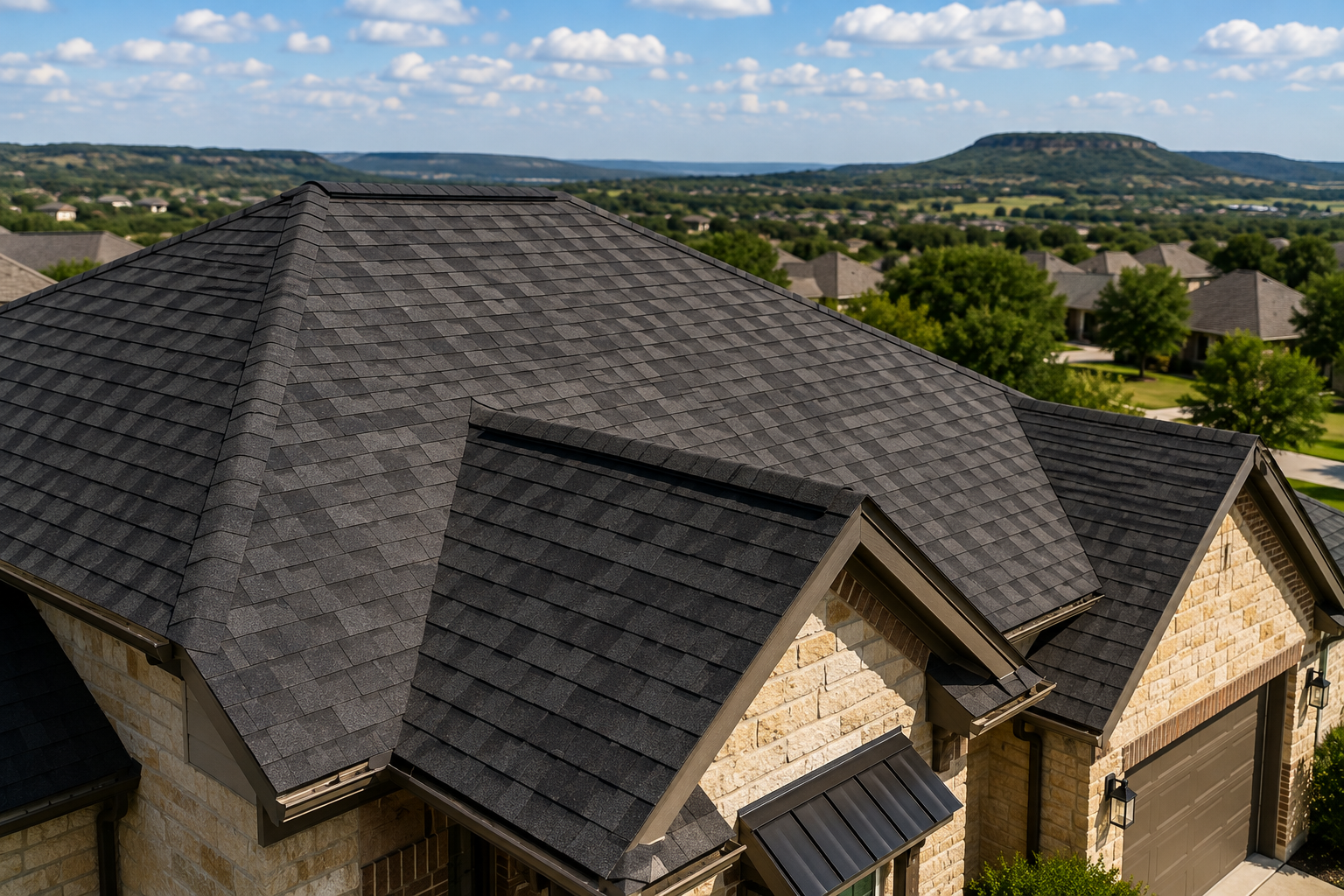
Best Roof Shingles for Texas Heat, Wind, and Hail: A Stephenville Homeowner’s Guide
Choosing shingles for a roof replacement is about more than picking a color. For homeowners in Stephenville and Erath County, a roofing system must stand up to prolonged heat, strong UV exposure, high winds, heavy rain, and the possibility of spring hailstorms.
The “best” shingle is not one universal product. The right choice depends on your roof design, material budget, preferred appearance, warranty terms, local weather exposure, and the quality of the installation. Heritage Roofing provides residential roofing in Stephenville and helps homeowners compare roofing systems that fit their property and long-term goals.
What Texas Weather Demands From a Roof
Central Texas roofs face conditions that can shorten the life of a poorly selected or poorly installed system. Summer sun and heat can contribute to material wear over time. Sudden storms can bring wind-driven rain, lifted shingles, damaged ridge caps, and hail impacts that may not be obvious from the ground.
When selecting shingles, homeowners should think about more than the product’s appearance. Ask how the full system will perform around valleys, flashing, roof penetrations, ridge lines, eaves, and ventilation areas.
A roof also needs to be installed for the property it protects. Roof slope, the number of valleys and penetrations, exposure to prevailing wind, tree coverage, attic ventilation, and the condition of the roof deck can all affect the recommendation.
The Main Asphalt Shingle Categories
Most homeowners comparing shingle roofs will encounter three broad categories: three-tab shingles, architectural shingles, and impact-resistant shingles. Each can be appropriate in certain situations, but they are not equal in appearance, thickness, warranty options, or performance features.
Three-Tab Shingles
Three-tab shingles are a traditional, flat-profile asphalt shingle. They are often chosen for simple roof designs and budget-focused projects.
They may be a reasonable option when the goal is to replace a basic existing roof within a limited budget. However, homeowners should compare their wind rating, warranty terms, visual appearance, and expected service life with architectural alternatives before deciding.
A lower upfront material cost does not automatically make a product the best overall value. If a home is exposed to frequent wind or hail, a stronger product may be worth considering.
Architectural Shingles
Architectural shingles, also called laminated or dimensional shingles, are one of the most common choices for residential roof replacement in Central Texas. Their layered construction creates a more dimensional appearance than a flat three-tab shingle.
Homeowners often choose architectural shingles because they can offer:
- A more textured, layered appearance
- A broad range of colors and style options
- Stronger construction than many basic three-tab products
- Available enhanced wind and impact-resistance options, depending on the product
- Manufacturer warranty options that vary by product line and installation requirements
The exact performance rating depends on the specific shingle—not merely the word “architectural.” Ask your contractor to identify the actual product line, manufacturer, published wind rating, warranty information, and included system components.
Impact-Resistant Shingles
Impact-resistant shingles are designed and tested to better withstand certain impact conditions, such as hail. They can be a worthwhile option for some Central Texas homes, especially where hail exposure is a concern.
However, “impact resistant” does not mean hailproof. No roofing material can guarantee that a storm will not cause damage. It also does not mean an insurance policy will automatically provide a discount. Requirements and available discounts vary by carrier, policy, location, and the product documentation required.
Ask the contractor to explain:
- The exact product being proposed
- The product’s published impact-resistance classification
- What documentation you may need for your insurer
- How the product’s warranty applies
- Whether the added cost fits your long-term plans for the home
If your existing roof has been through a significant storm, start with a documented storm and hail damage assessment before choosing new materials. An inspection can help determine whether the current issue is localized, widespread, or related to storm damage.
Shingles Are Only One Part of the Roof
A quality roof replacement is a system, not a stack of shingles. The parts underneath and around the shingles matter just as much because they manage water, secure the materials, protect vulnerable transitions, and support long-term performance.
Your written scope should identify the major system components, including:
- Roof deck inspection and any approved decking repairs
- Underlayment
- Starter shingles or starter materials
- Ridge caps
- Flashing around chimneys, walls, vents, skylights, and valleys
- Drip edge
- Fasteners
- Ventilation components
- Tear-off, disposal, and property cleanup
If a proposal just says “new roof” without defining these components, ask for more detail. A complete roof replacement should explain the materials, work scope, deck evaluation, and installation approach before work begins.
Why Attic Ventilation Matters
Attic ventilation is especially important in Texas. Excess heat and moisture in the attic can affect comfort, contribute to material stress, and reduce the long-term performance of the roofing system.
Good ventilation is not simply adding one vent. A contractor should evaluate intake and exhaust airflow, roof design, attic conditions, and the existing components before making a recommendation.
If you are replacing a roof, ask whether ridge vents, soffit vents, gable vents, powered ventilation, or other changes are appropriate for the home. Heritage Roofing provides skylight and attic ventilation services for homeowners who need a broader assessment of airflow, roof penetrations, or skylight-related concerns.
Color, Curb Appeal, and Heat
Roof color changes the appearance of your entire home, so it deserves more thought than a quick sample-board decision. Consider siding, brick, stone, trim color, exterior lighting, and neighborhood guidelines before selecting a shingle color.
Darker shingles generally absorb more sunlight than lighter colors, but color alone does not guarantee a specific energy-cost result. Attic insulation, ventilation, air sealing, windows, home orientation, shade, and HVAC performance also affect indoor comfort and cooling demand.
Use samples to view colors outdoors at different times of day. A color that looks gray in a showroom may look warmer, darker, or more reflective in full Stephenville sun.
How to Choose the Right Shingles
Before selecting a product, use this checklist:
- Ask for the exact manufacturer, product line, and color name
- Compare published wind and impact-resistance ratings for the specific products
- Review the manufacturer warranty and any registration requirements
- Ask what workmanship warranty the contractor provides
- Confirm which underlayment, flashing, ridge caps, and starter materials are included
- Discuss decking, ventilation, and roof-penetration concerns before installation
- Compare written estimates with the same scope and system components
- Consider how long you expect to own the home and your budget for long-term value
- Ask whether matching materials would be available for future repairs
- Review samples in natural light before making a final selection
A written estimate should make the comparison clear. If two proposals use different materials, omit important components, or do not explain warranty terms, they are not equivalent estimates—even if one total looks lower.
Repair or Replacement: Which Comes First?
Not every missing shingle means you need a full replacement. A targeted roof repair may be appropriate when damage is isolated, materials can be matched, and the overall roof remains in good condition.
Replacement becomes more practical when shingles are broadly deteriorating, leaks recur, storm damage affects multiple areas, or the roof is near the end of its useful service life. A contractor should explain the evidence behind the recommendation and give you a written scope—not pressure you into a larger job.
A professional roof inspection is the best first step when you are unsure whether you need a repair, a full replacement, or simply a maintenance plan.
Questions to Ask Your Roofing Contractor
Before approving new shingles, ask:
- Which shingle product line are you recommending, and why?
- What are the product’s published wind and impact-resistance ratings?
- What is included beyond the shingles?
- Will the roof deck be inspected after tear-off?
- How will damaged decking or hidden conditions be documented and approved?
- How will ventilation be evaluated?
- What material and workmanship warranties apply?
- Who manages the crew, site protection, cleanup, and final walkthrough?
- Can you provide a detailed written estimate?
- Can you show me samples and explain the color options?
Good answers should be specific and documented. Vague promises, one-line pricing, or pressure to sign before you understand the scope are reasons to slow down.
Get a Shingle Replacement Estimate in Stephenville
The right roofing material should match your home, budget, and Central Texas weather conditions. Heritage Roofing can inspect your roof, explain your material options, and provide a clear written estimate for the work that makes sense for your property.
For homeowners in Stephenville, Dublin, Hico, Lingleville, Morgan Mill, and across Erath County, explore roofing services in Central Texas or call 254-968-7663 to request a free estimate.
Tags